
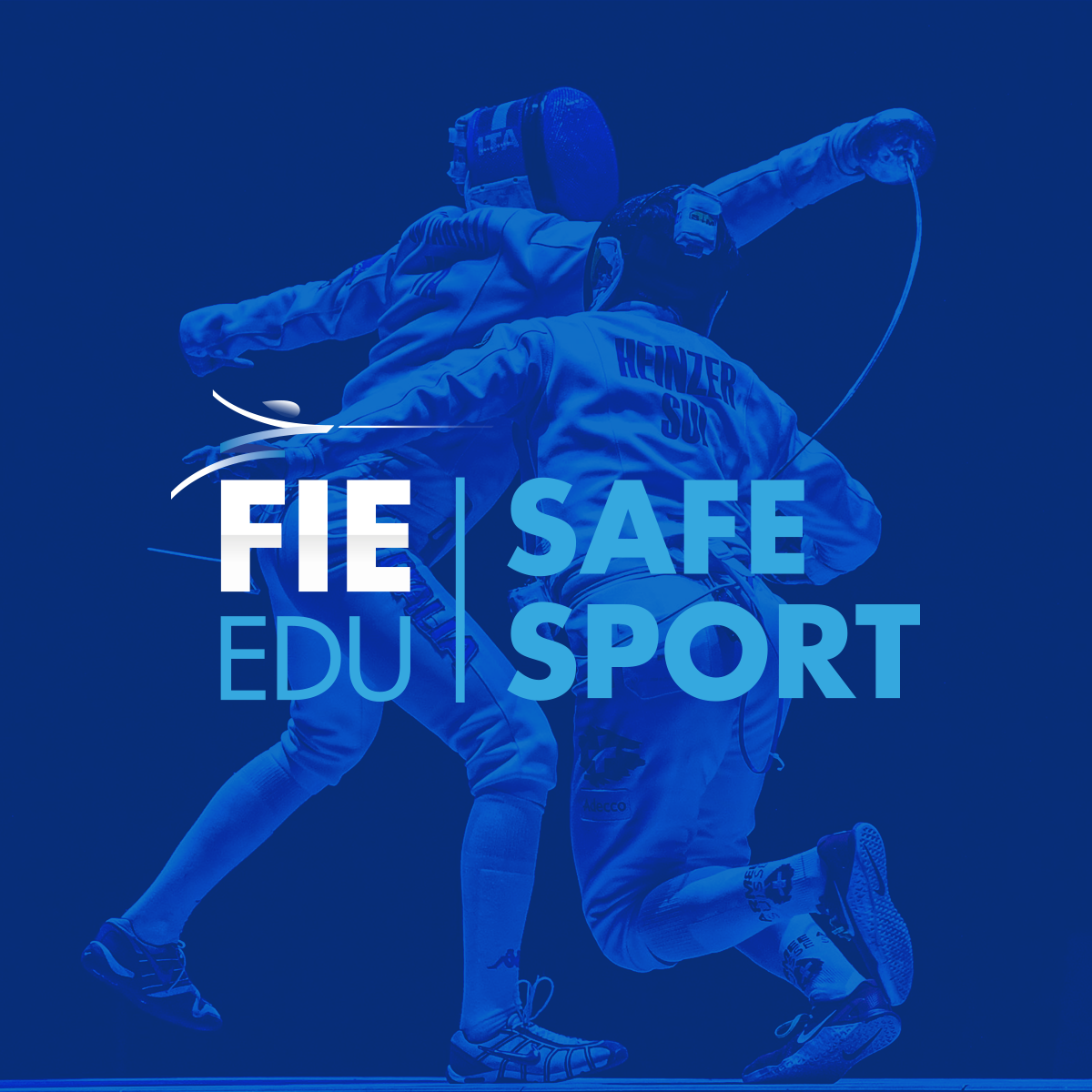
Ensuring a safe sporting environment for athletes is a top priority for the International Fencing Federation (FIE).
As the heart of our sport, fencers deserve to train and compete in conditions that are fair and free from all forms of harassment and abuse.
In line with Olympic Agenda 2020+5 recommendations and the United Nations Sustainable Development Goals (SDGs), the FIE is actively strengthening our safeguarding frameworks through a robust strategy centred on support for National Federations, the training of safeguarding experts, and awareness-raising among stakeholders.
One of our latest initiatives is to provide two days of Safe Sport training ahead of the Senior World Championships this summer in Hong Kong. The workshop is open to all National Federations (which can register participants here) and will feature prominent experts from around the Olympic Movement, including the International Olympic Committee (IOC).
Scheduled for 22 and 24 July, the training will be led by FIE Safeguarding Officers Hossam Elleboudy (EGY, UAE), Teodora Višnjić (SRB), and Bradley Johnston Leyer (CRC). Gloria Viseras (ESP), Senior Manager for Safeguarding in the IOC’s Health, Medicine and Science Department, has confirmed her presence at the event on 22 July.
The workshop is one of many measures included in the FIE’s comprehensive Safe Sport Development Plan, which forms an integral part of the 2025-2028 FIE Strategic Plan.
The Safe Sport Development Plan aims to:
- ensure consistent safeguarding standards;
- strengthen safeguarding capacity;
- promote prevention and awareness; and
- increase monitoring and accountability.
Two FIE candidates – Jing Shang and Celina Dayrit-Evangelista have successfully obtained their IOC certification as Safeguarding Officers in Sport for the 2025-2026 academic year, which brings the FIE’s team of IOC-accredited professionals to six upon graduation.
The “IOC Certificate: Safeguarding Officer in Sport” programme empowers participants to play a crucial role in stopping harassment and abuse in sport. Students learn how to foster athlete well-being and implement robust safeguarding measures both within their organisations and at major sporting events.
Two existing IOC Safeguarding Officers, Elleboudy and Georgina Usher (GBR), are also enrolled in the IOC’s “Train-the-Trainers Safeguarding Essentials for Safeguarding Focal Points Programme” and attended the in-presence workshop delivered at the Olympic House in Lausanne on the past 19 May.
Launched in 2025, the Safeguarding Essentials course is geared towards IOC-recognised sports organisations such as International and National Federations, designed to equip participants with the foundational knowledge and practical guidance to implement preventative measures, respond appropriately to disclosures, and understand referral pathways (including law enforcement).
As part of the FIE’s initiatives to assist the National Federations, in addition to offering a range of materials online, we recently surveyed each Member Federation to assess their current needs and determine how we can best support them.
Questions gathered information on a vast range of topics, from safeguarding policies already in place, and the participation of athletes in the development of such policies, to the existence of special provisions for children and other vulnerable groups.
The FIE is now analysing the responses to tailor our upcoming interventions, ensuring resources are directed where they are most needed.
The comprehensive Safe Sport initiatives being implemented by the FIE are designed to provide secure, abuse-free training and competition environments for athletes, coaches, staff, and volunteers.
Through standardisation, training, awareness-raising and monitoring, the FIE continues to work in the best interests of the athletes while positioning itself as a model for the global Safe Sport movement.