The sport of fencing is proudly gender-equal on the field of play, with the same number of male and female athletes competing at all International Fencing Federation (FIE) events globally.
But like in many sports, work still needs to be done to increase the number of women coaches, a goal actively being addressed under the FIE’s 2025-2028 Strategic Plan.
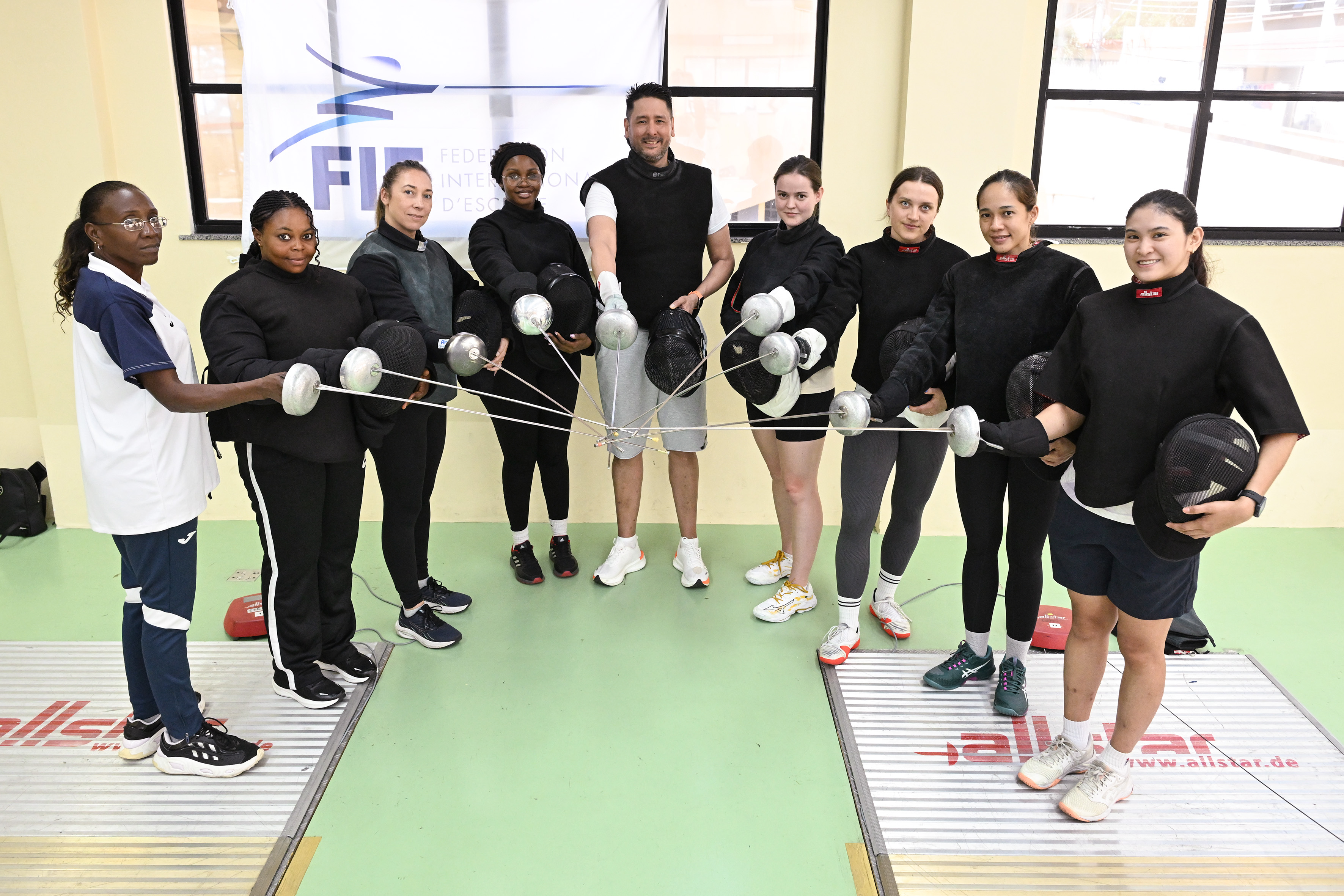
Ahead of the recent Junior and Cadet Fencing World Championships in Rio de Janeiro, the FIE invited 13 female coaches from 13 countries on the FIE development path to the 2026 International Women’s Coaching Seminar, the second of its kind.
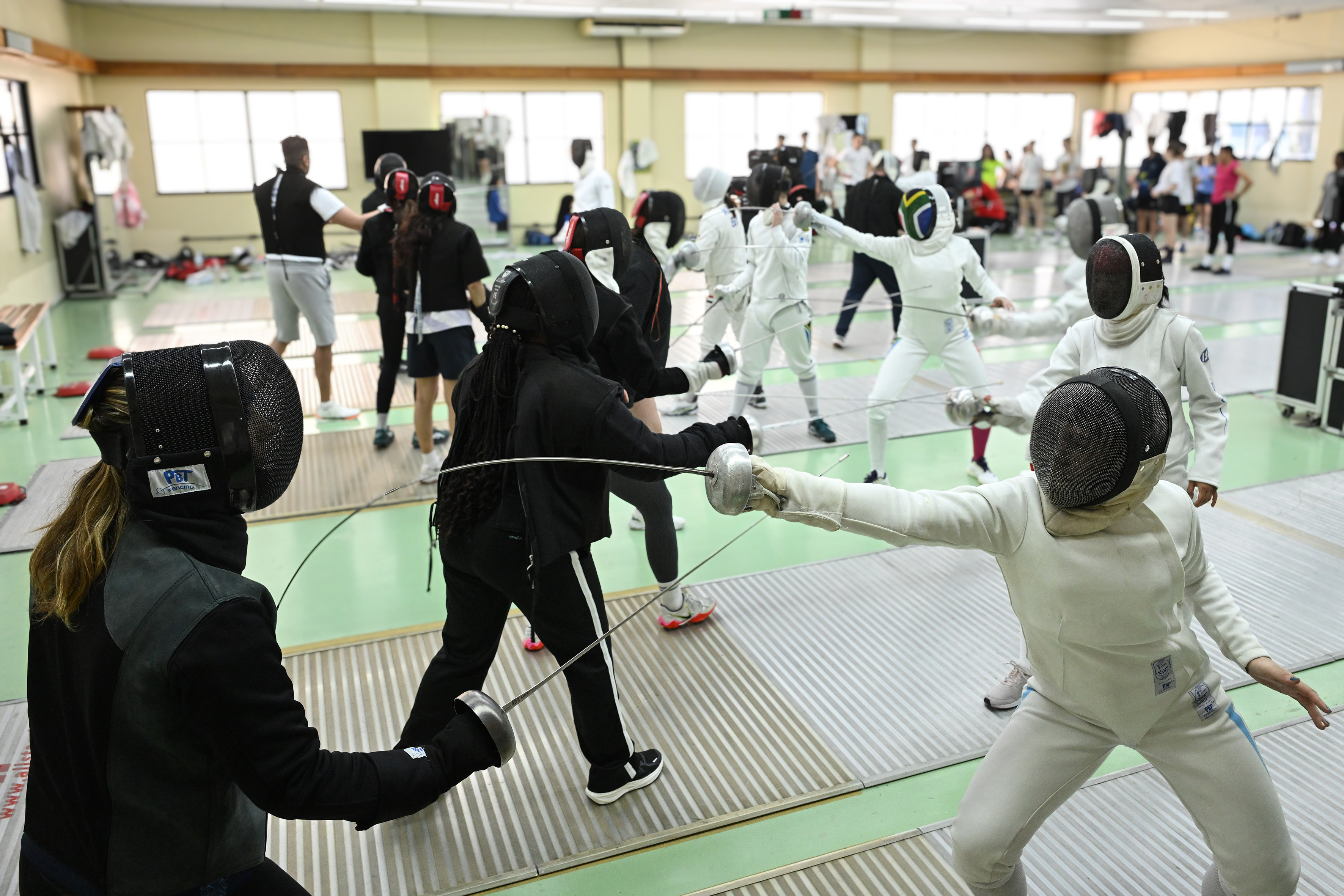
Taking place over seven days from 26 March to 01 April, the seminar provided participants with both theoretical and technical training, allowing them to develop their coaching techniques in epee, foil and sabre while also strengthening their leadership skills.
“It’s a jam-packed itinerary which has taken me through psychology, career, as well as technique,” said Botswana’s Camille Gombalume. “And I believe with all that I have received, I will do more than I have been able to do, pushing beyond by current capabilities.”
The coaches spent over 40 hours learning together, all under the guidance of 3 weapon-specialized coaches and 10 experts and speakers, who provided lessons on topics ranging from sports medicine to safeguarding.
“The initiative the FIE has taken with these seminars gives [the women coaches] an opportunity to prepare, to acquire new knowledge that helps them in their journey of growth at a personal career level to achieve better results and better outcomes,” said class instructor José Benavides.
The seminar opened with a video message from Maja Martyna Włoszczowska, 1st Vice-Chair of the IOC Athletes’ Commission, and was followed by an opening address from Member of the FIE Executive Committee and FIE Women and Fencing Council Abu Hassan Rusni.
Leadership development formed a major part of the curriculum, with FIE Women and Fencing Council President Melissa Alvarenga delivering a powerful presentation on the topic.
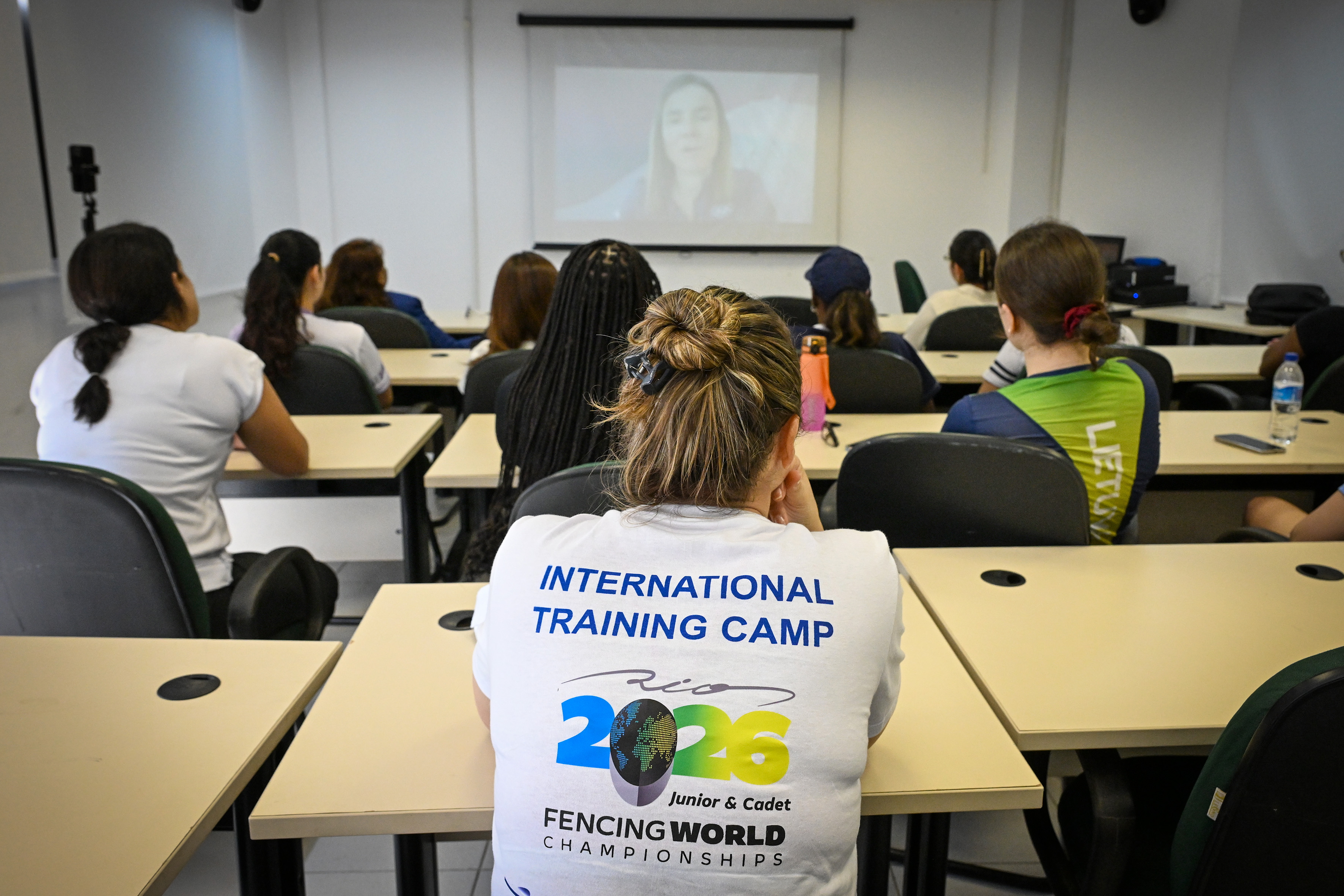
Global Sports Consultant Jules McGeever presented an Equal Careers course over four sessions on 27 and 28 March. Through 12 hours of practical exercises and theoretical training, McGeever empowered participants to improve their communication skills, boost their confidence and strengthen decision-making abilities in coaching scenarios.
Afterwards, McGeever said she was greatly impressed with the students’ passion and potential. “There are two words that I would us to describe the coaches I’ve spent the day with: powerful – power that comes from within – and unstoppable. From what I’ve seen, their trajectory is going to change the footprint of coaching.”
The bulk of the seminar focused on technical training, with sessions led by José Benavides (epee), Petru Kuki (foil) and Alex Golubev (sabre). Individual final exams awaited each of the participants at the end of the week.
As part of the educational component of the seminar, dedicated lectures were given on each weapon, while an intervention on safeguarding was delivered by Women and Fencing Council Member Georgina Usher, MBE. A presentation on the coach’s role in ensuring the safe return of athletes after injury and collaboration with medical staff was provided by FIE Medical Commission Member Lazar Miceta.
A final presentation was delivered by Yane Marques, Vice-President of the Brazilian Olympic Committee and bronze medallist in modern pentathlon at the Olympic Games London 2012. Marques shared her experiences as a female athlete and her transition into coaching and leadership in sport.
On hand to congratulate the student coaches at the closing ceremony were FIE Interim President Abdelmoniem ElHusseiny, FIE Secretary General Gulnora Saidova, the presidents of all confederations, and members of the FIE Executive Committee. The ceremony concluded with each of the participants receiving diplomas and coaching equipment.
By uniting women coaches from 13 countries under one roof ahead of the Junior and Cadet World Championships, the FIE offered a comprehensive professional-development experience that did not end in Rio. Armed with their new learnings, the participants return home as certified leaders eager to share their knowledge with the next generation of fencers and female coaches.