

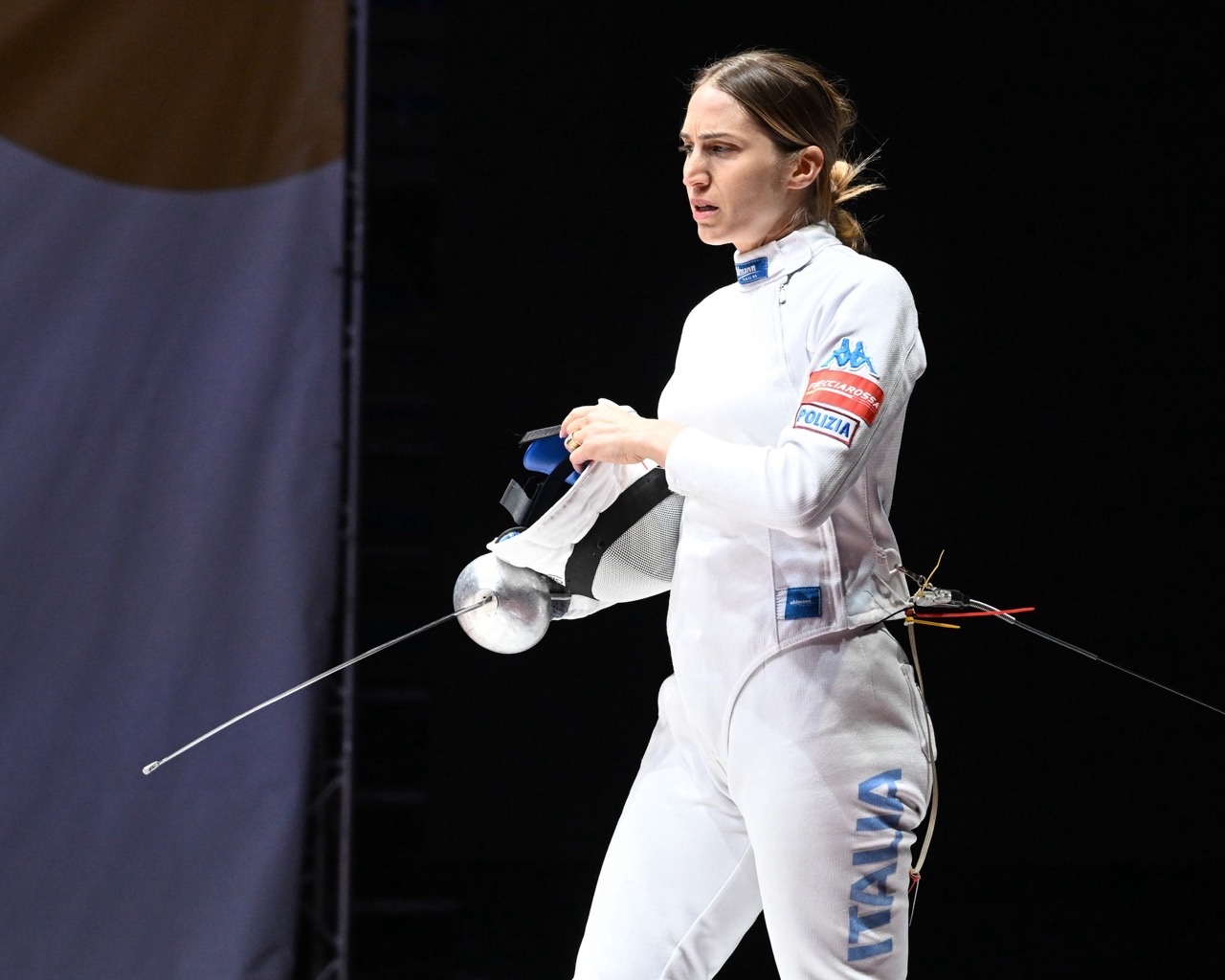
Giulia Rizzi arrived at the Paris Olympic Games having already traveled a long and often difficult road. Competing at the Olympics had been a dream since childhood, and in Paris she achieved it—ultimately winning gold as a member of Italy’s épée team.
But the medal was only one moment in a much longer journey, one defined less by results than by belief.
Rizzi began fencing at the age of six. “When I was young, I saw videos of Valentina Vezzali and Giovanna Trillini,” she said, “and I told my mother I wanted to travel around the world like them and maybe make the Olympics.”
She reached the senior podium quickly, earning bronze at the World Cup in Florina, Greece, in March 2009 at just 20 years old.
“When you arrive at senior competitions,” Rizzi said, “nobody knows you.”
Then came a stretch that tested that early promise. After Florina, it took seven years before she reached the podium again, finally winning silver at the Legnano World Cup in May 2016.
Did she ever lose confidence during that long drought?
“No,” Rizzi said. “I knew it was part of the journey. I was still making finals, just not the podium. I didn’t understand why—but in life, and in fencing, there are rough steps. I knew I had to overcome them.”
Another drought followed—six more years before her next medal, gold at the Vancouver World Cup in December 2022.
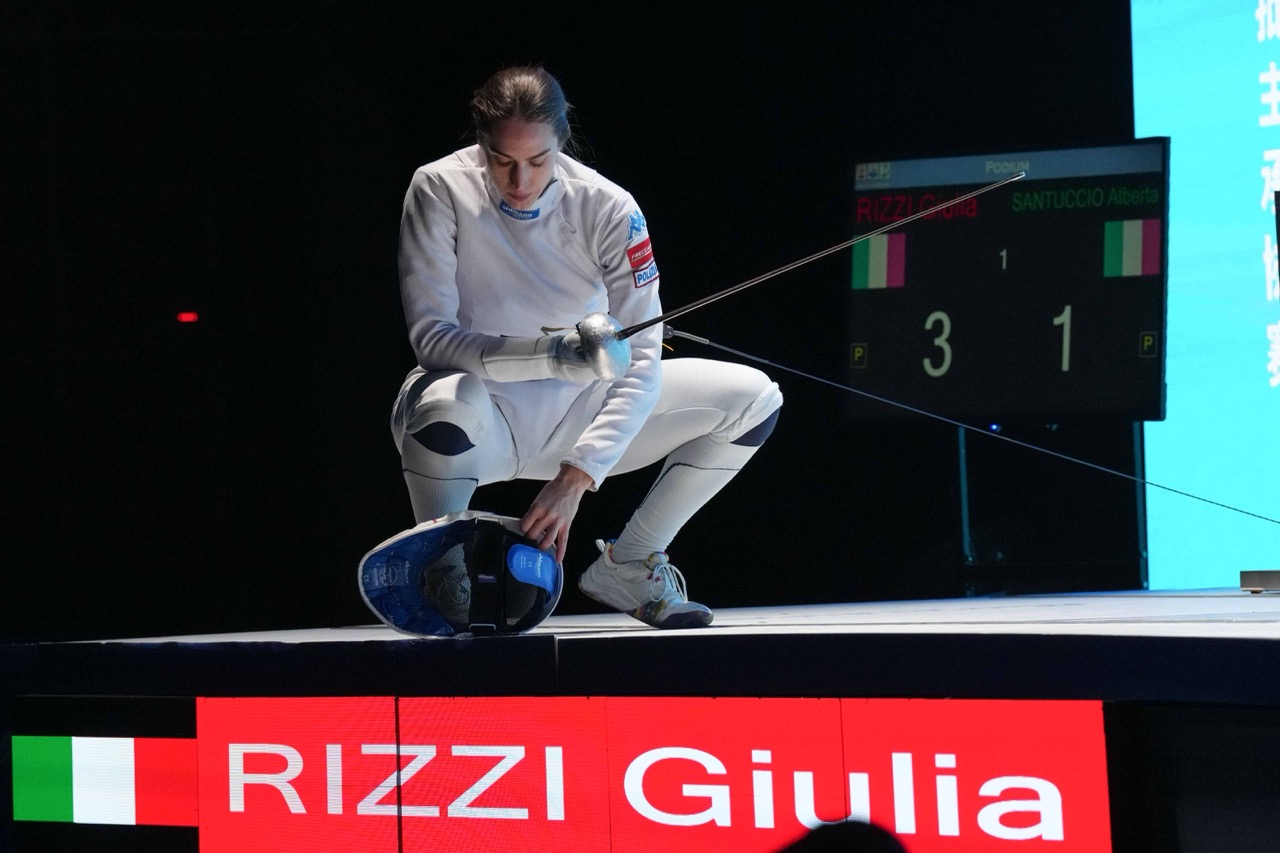
Again, did she ever doubt she would return to the podium?
“No. I had good results, finals, finals, finals. I was strong physically and mentally, and everyone told me I had the capacity to succeed.”
A year before Paris, Rizzi was told she would not make the Olympic team. She was considered too old, and the lineup was already set.
“I knew I could do it,” she said. “So, I moved back from France to Italy to train.”
That move proved pivotal.
“I had trained for many years in France, and I learned so much there,” Rizzi said. “But coming back to Italy and working with my coach Roberto Cirillo changed everything. I knew he would go to battle with me.”
The results followed. From age 20 to 34, Rizzi won three World Cup medals over nearly 15 years. Since turning 35, she has won seven World Cup and Grand Prix medals in just two seasons.
Still, one challenge remained: Grand Prix gold.
In January of 2024 in Doha, Rizzi lost in overtime, 14–13, to Man Wai Vivian Kong of Hong Kong, China. In May of 2024 in Cali, she fell 15–14 on a double touch to Auriane Mallo-Breton of France.
Then came Budapest in March of 2025.
Leading 11–9 late in the final against 17-year-old Anna Maxymenko of Ukraine, Rizzi attacked in the middle of the piste and was hit on the counterattack—twice. The bout went to overtime, where Rizzi again attacked and Maxymenko scored for the win.
“It was a stupid action,” Rizzi said. “Not a lunge, not a fleche—something in between. I just saw it as another rough step in the journey.”
They say the third time is a charm. For Rizzi, it was the fourth.
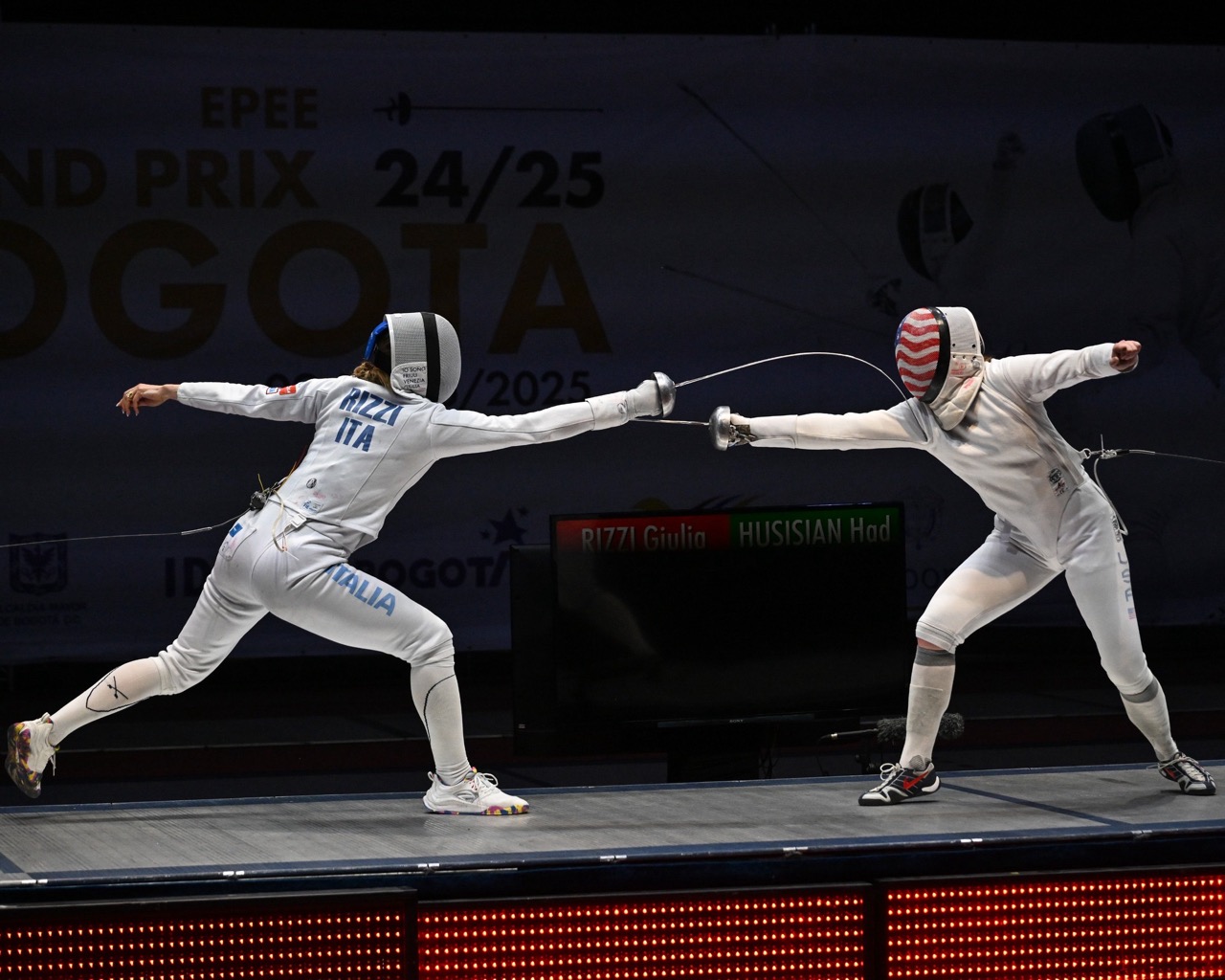
Two months later in Bogotá, Rizzi reached another Grand Prix final, this time against American Hadley Husisian. She built a commanding 14–8 lead. Even as Husisian closed the gap, Rizzi remained calm.
“I knew the lead was too big,” she said. “I knew I would score.”
She did.
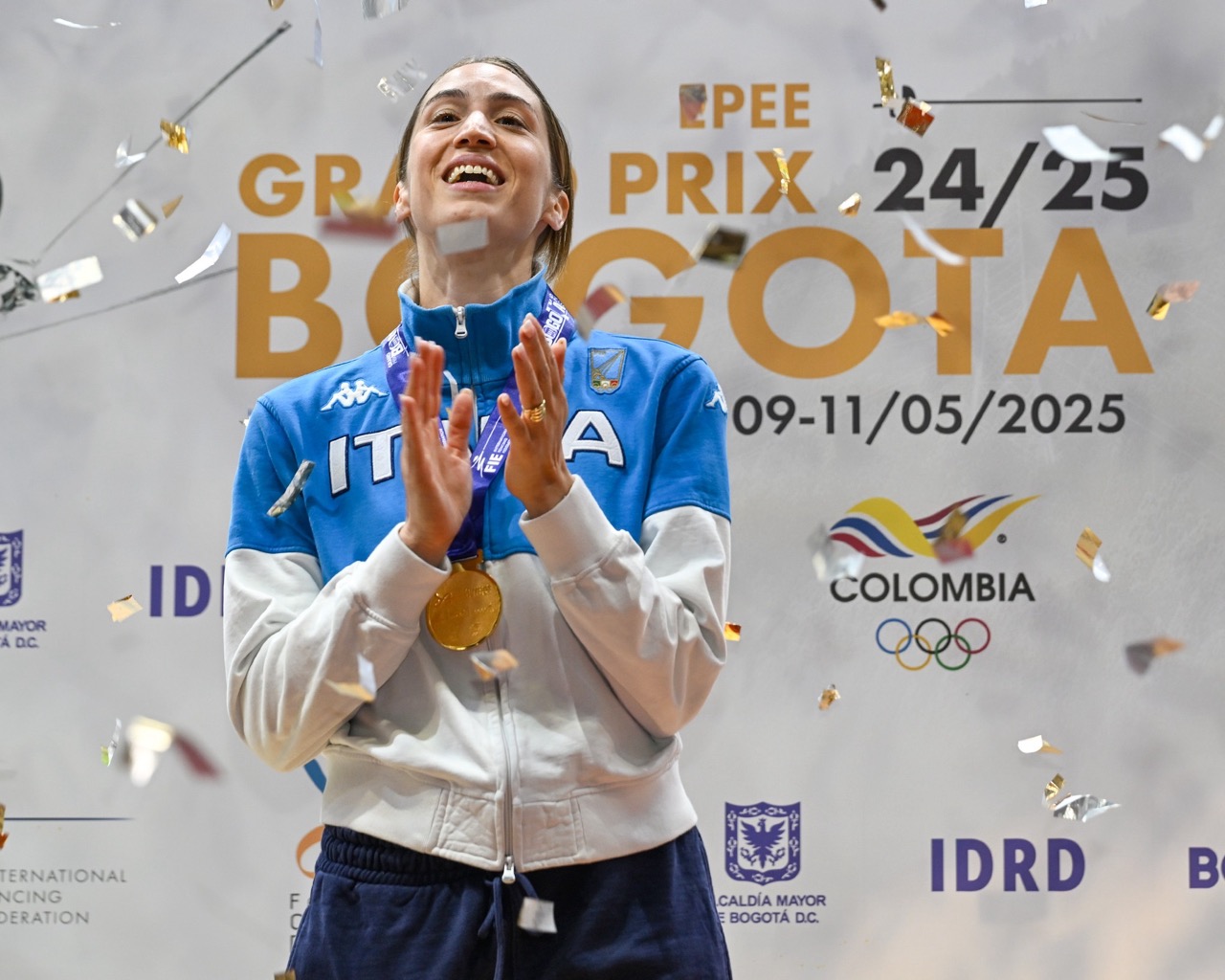
Pulling out her phone, Rizzi played the FIE highlight video from Bogotá, smiling as the commentator declared, “She’s done it! It’s finally gold for Giulia Rizzi of Italy.”
“I always believed in the journey,” Rizzi said. “In the process. And in myself.”
That unyielding belief in the journey was challenged at the Doha, Qatar Grand Prix in January, where Rizzi was eliminated in the round of 64. Incredibly, just two weeks later, she came right back to win gold at the Wuxi, China World Cup.

Rizzi summed up the highs and lows of sport by saying, “After a big defeat there is always a big winning.”
Giulia Rizzi looks forward to more “big winning” at the Grand Prix this weekend in Budapest, Hungary.