Environmental sustainability is becoming a visible reality across international fencing. With the start of the 2025–2026 season, the International Fencing Federation (FIE) has taken a decisive step forward in embedding sustainable practices into its competitions, transforming environmental responsibility from ambition into concrete action.
Agreements signed between the FIE, National Federations and Local Organising Committees now include specific sustainability requirements, ensuring that environmentally responsible practices are integrated into both the planning and delivery of events. Measures such as reducing single-use plastics, implementing waste separation and recycling systems, promoting environmentally friendly transport and encouraging digital communication are increasingly becoming standard across FIE tournaments.
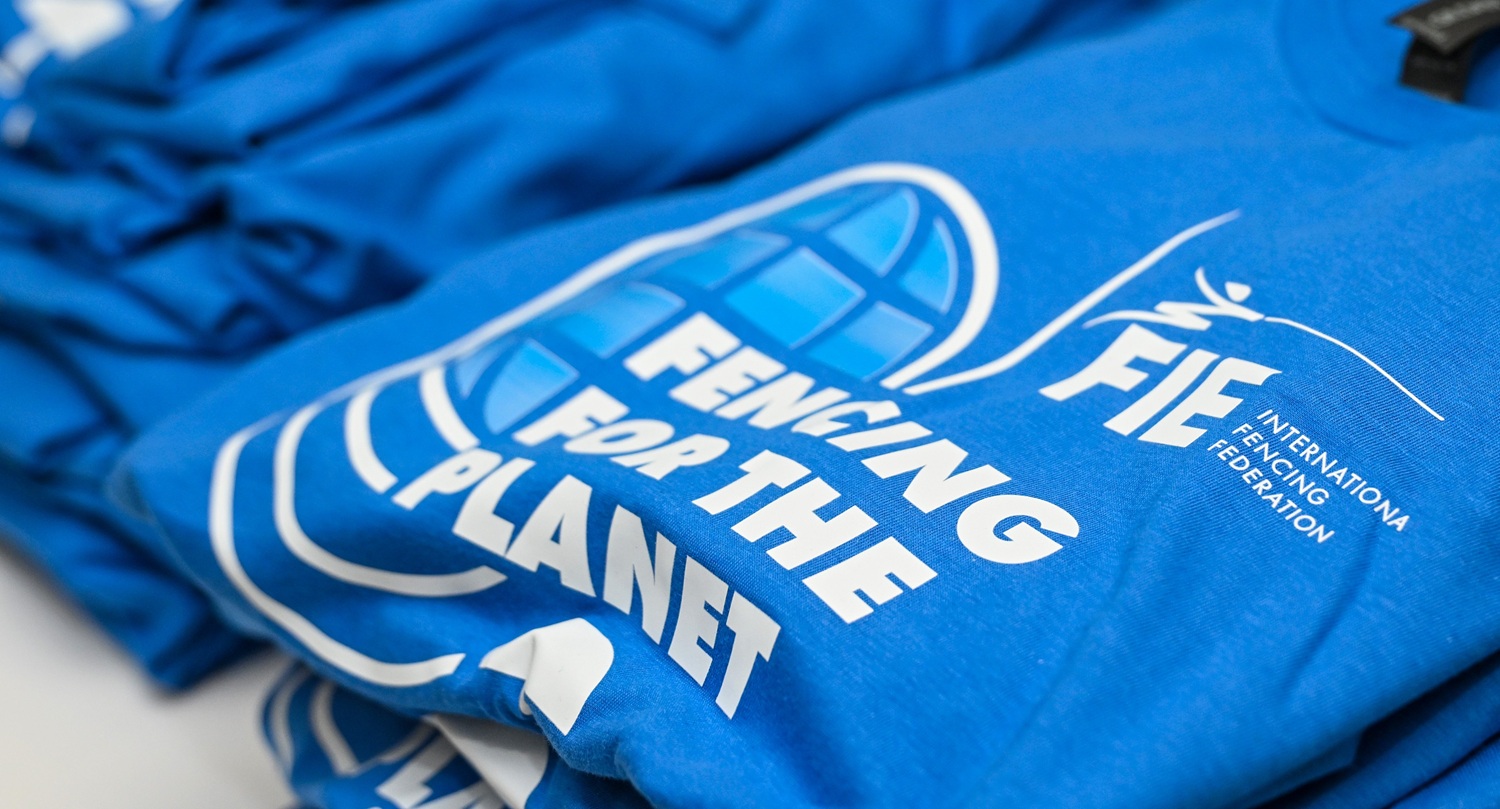
These actions form part of the FIE Strategic Development Plan, which aims to expand the Fencing for the Planet initiative throughout all levels of the sport. Organisers have responded positively, adapting sustainability measures to local contexts and, in many cases, going beyond initial recommendations while contributing to the United Nations Sustainable Development Goals.
Recent competitions illustrate how sustainability can be effectively implemented in practice. At the Junior and Cadet Foil World Cup in Fujairah (2–4 January 2026), eco-friendly catering solutions prioritised reusable and biodegradable packaging, while surplus meals were redistributed to venue staff and local charities, helping to reduce food waste and its environmental impact.
In Madrid, organisers benefited from a strong municipal framework supporting waste reduction, reuse and recycling within a circular economy approach, demonstrating how cooperation with local authorities can turn waste management into both an environmental and economic resource.
Meanwhile, the Sabre World Cup in Salt Lake City highlighted the importance of venue selection in reducing carbon emissions. The LEED Silver-certified Salt Palace Convention Center, equipped with renewable energy solutions and located within walking distance of hotels, enabled participants to minimise transportation needs while reducing energy and water consumption.
Today, practices such as waste separation, paperless communication and shared transport are becoming increasingly common across FIE events. Beyond their measurable environmental benefits, these initiatives also carry an educational dimension, encouraging athletes, coaches, officials and spectators to adopt more environmentally conscious habits.
As the FIE continues to strengthen its role as a promoter of sustainability in sport, fencing is steadily moving towards a future where performance and environmental responsibility advance together.